
ForceDecks for Post-Surgical Rehab: Objective Strength Tracking for Safer Progression
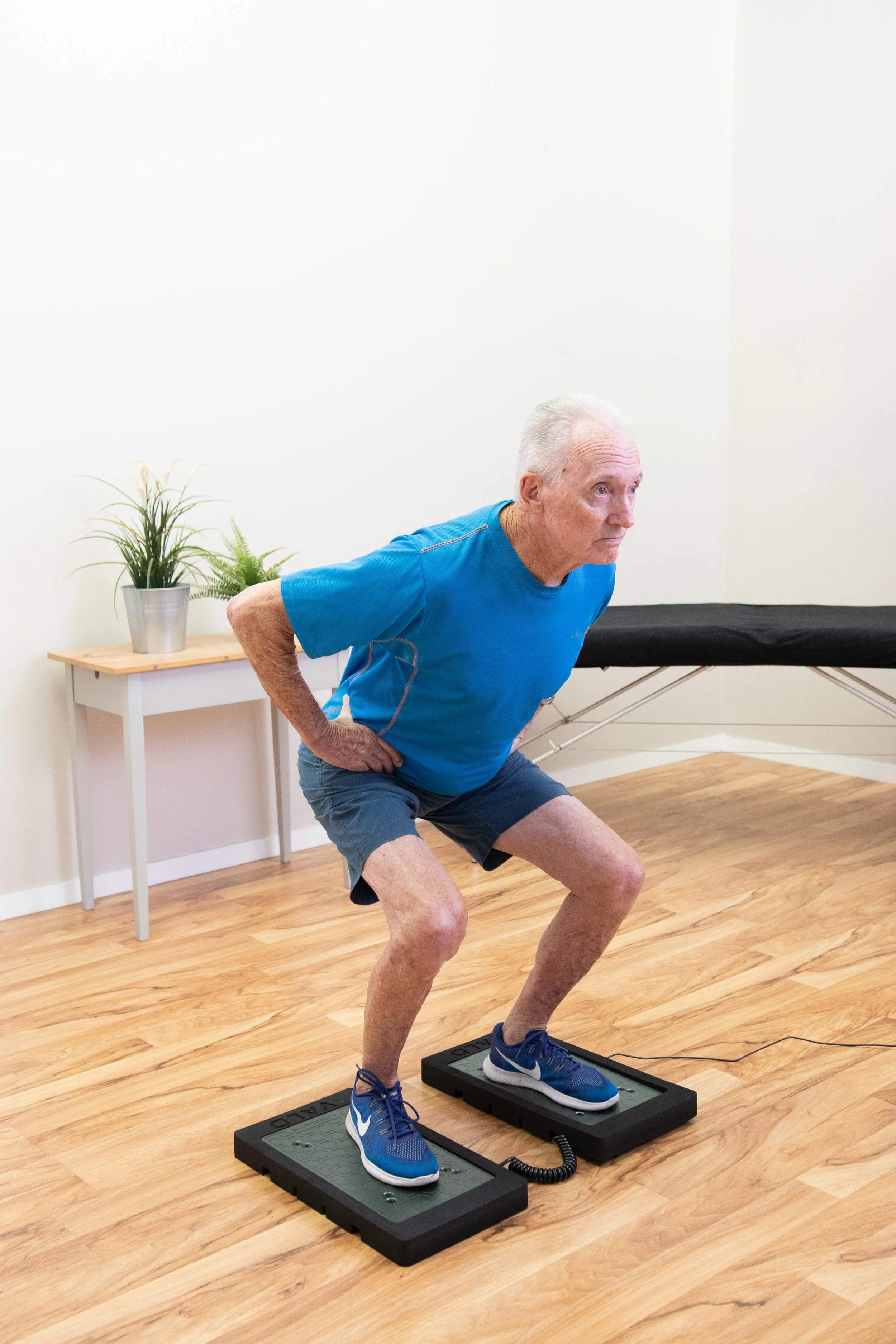
Recovering from a major surgery, whether ACL reconstruction, Achilles repair, or hip and knee procedures, requires time, structure, and precision. Pain can improve long before strength and movement patterns do, which is why relying solely on “How does it feel?” is never enough. At Technique Health & Fitness, we integrate VALD ForceDecks into both pre-surgery and post-surgery rehabilitation to ensure progress is measured, safe, and aligned with evidence-based return-to-sport criteria.
Pre-Surgery: Establishing a Baseline (Prehab)
Before surgery, we use ForceDeck testing to document an athlete’s true baseline, including single-leg strength, landing mechanics, and power output. This helps us:
Set clear post-op performance goals
Identify compensations developed pre-surgery
Guide targeted prehab to optimise surgical outcomes
By measuring how each leg produces and absorbs force, we gain detailed insight into the athlete’s starting point. This data becomes the benchmark we work toward, and eventually surpass, during post-surgical rehab.
Post-Surgery: Objective Strength Tracking at Every Stage
After surgery, recovery is rarely linear. ForceDecks allow us to monitor improvements at every phase with tests that match the athlete’s healing timeline. Early on, this may involve isometric strength assessments, bodyweight squats, or controlled shifts in weight bearing. As healing progresses, we reintroduce:
Countermovement jumps
Single-leg landing tests
Rate of force development (RFD) profiles
Symmetry assessments during takeoff and landing
These metrics capture real-time data on peak force, power production, and asymmetries, far more precisely than visual observation alone.
For example, post-ACL athletes often favour their uninjured leg long after pain has resolved. ForceDecks may show the surgical side generating 20% less force or absorbing significantly less landing load, a clear sign that more strength and neuromuscular training are needed before progressing.
Some sports medicine protocols even require athletes to reach ~90% of their pre-injury strength and power before returning to activities such as skiing, underscoring the value of objective testing.
Across the literature, achieving <10% limb asymmetry is strongly associated with reduced re-injury risk in dynamic sports.

Why It Works: Confidence Through Data
Showing patients their progress, force curves, jump height improvements, symmetry graphs, turns rehab into a measurable, motivating process. It provides clarity for the physio, confidence for the patient, and reassurance for coaches and surgeons that return-to-sport decisions are safe and evidence-based.
ForceDeck testing ensures every step forward is justified, and every return-to-sport decision is supported by objective evidence.
Book Your Assessment
If you're preparing for surgery or working through your post-op rehab, objective testing can accelerate progress and ensure every phase is safe and targeted.
Book your physiotherapy session at our Liverpool Street clinic inside 24N Fitness and rebuild your strength with complete confidence.
